



What is a bacteriophage?
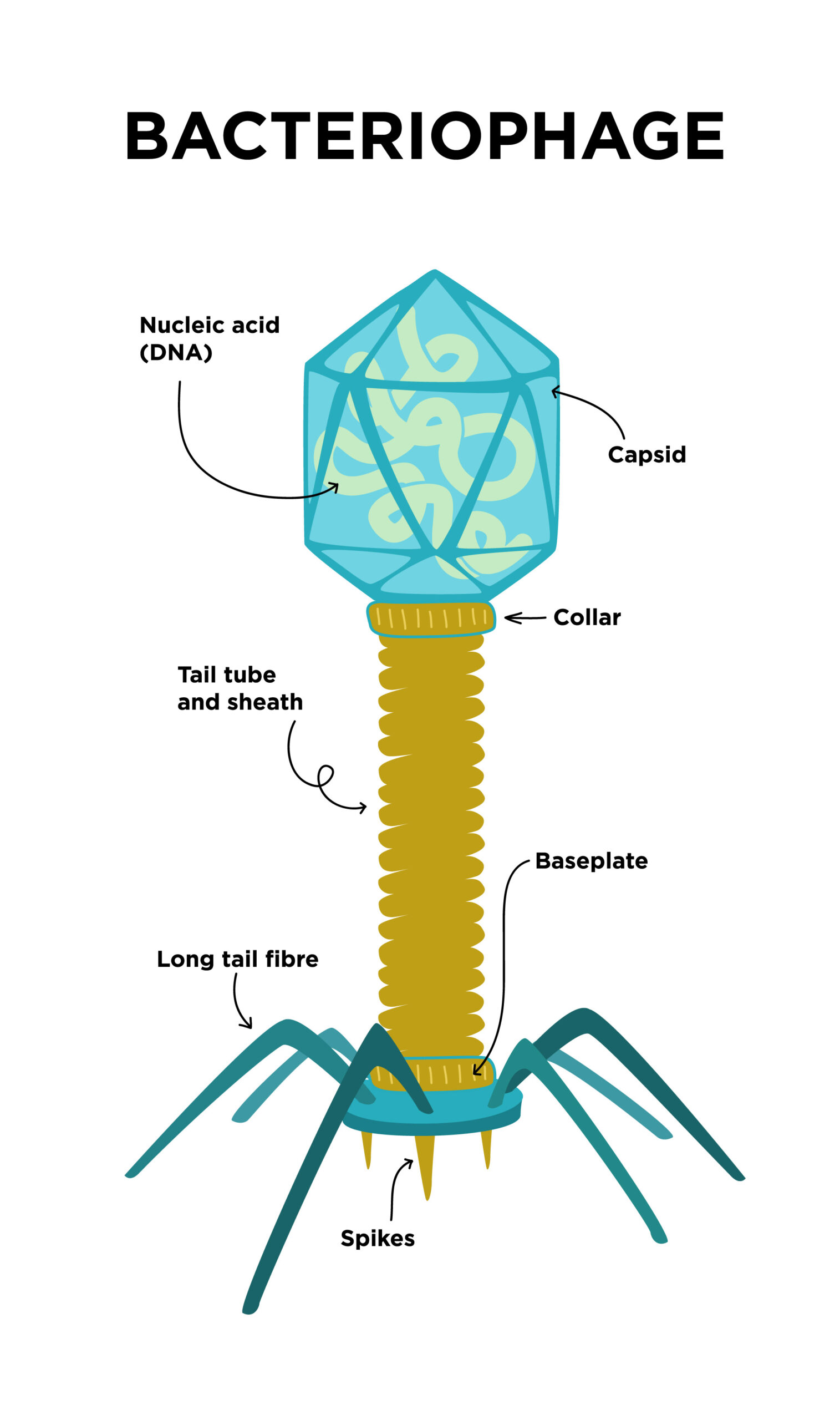
Phages are found virtually everywhere the appropriate bacterium is present. Due to their role in nature, they are very stable in the environment and contribute significantly to the regulation of global bacterial biomass. However, they are specific and almost always only infect strains within a single bacterial species; they rarely cross species boundaries. While phages are living entities, the most abundant in the biosphere, they are not organisms because they lack metabolism. Bacteria and phages are ubiquitous globetrotters, constantly undergoing evolution, and they co-evolve together. These processes occur in all conceivable natural habitats, as well as in the human and animal microbiome. The complexity of the human microbiome—the entirety of microbial life in and on us (gut, skin, respiratory tract including lungs)—is only gradually being recognized. This includes, in particular, bacteria and phages, which ideally exist in a state of equilibrium.
Explanatory Video
Antibiotic-resistant bacteria, including multidrug-resistant and even pan-resistant bacteria, are playing an increasingly important role in medicine. This problem is developing into a global crisis, which was addressed by the WHO in its first overview report in 2014. In early 2017, the WHO published a "Priority Pathogens" list of bacteria most frequently involved in multidrug-resistant infections and requiring the greatest action regarding complementary antibacterial therapies. These bacteria include the common global pathogens mentioned above, such as Acinetobacter baumannii, Pseudomonas aeruginosa, Escherichia coli, Enterococcus faecium, Staphylococcus aureus, etc. When they are involved as multidrug-resistant strains, so-called hospital germs, or when they persistently colonize weakened individuals, these infections often become life-threatening.
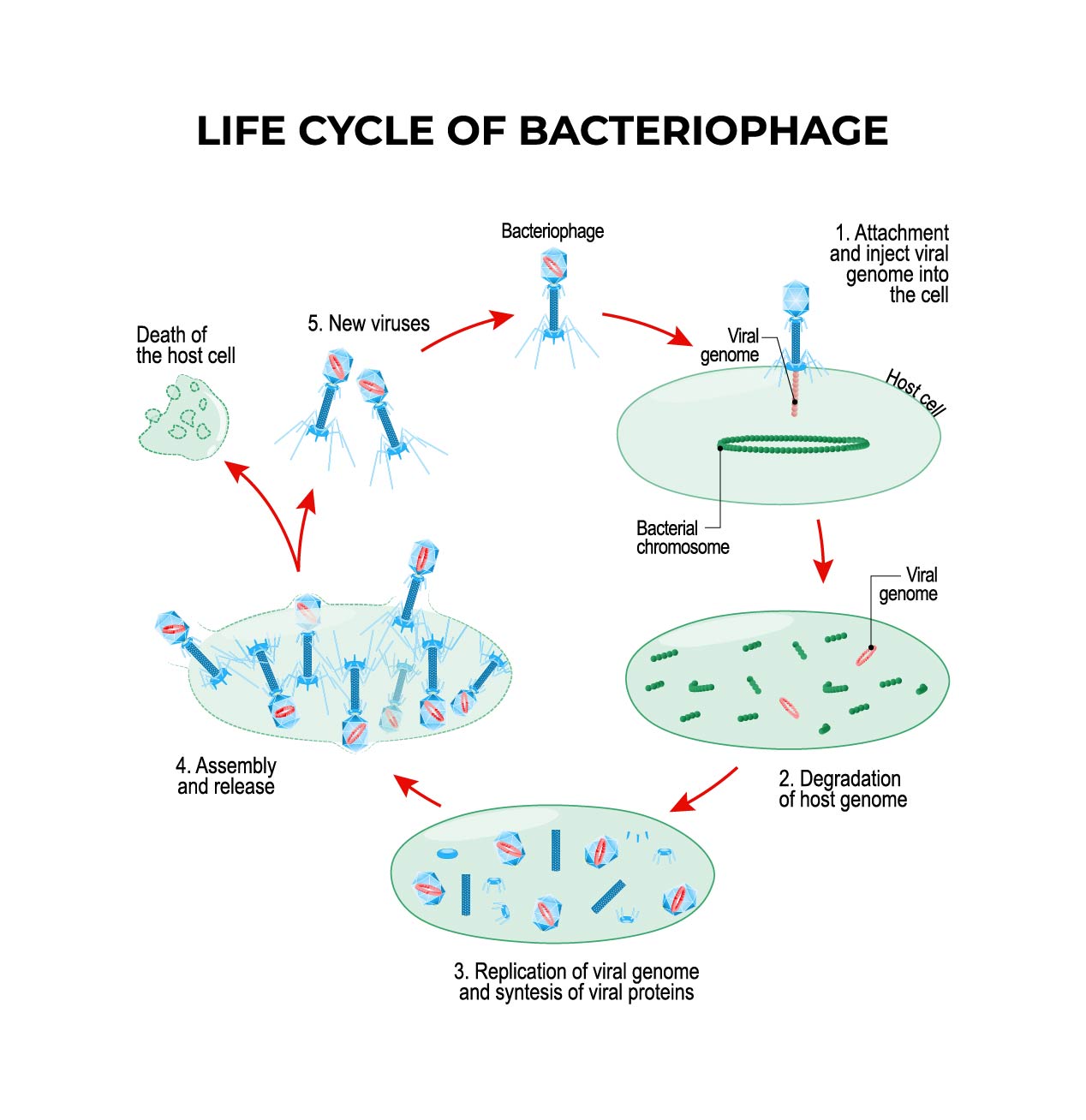
The efficacy of lytic phages is therefore highly desirable, especially since no significant side effects have been described for phage therapy and some phages penetrate biofilms better than antibiotics. Phages are the only drug that replicates at the site of infection and disintegrates after lysis of all suitable bacteria. Thus, phages are self-regulating. Since several phages from a set of available phages may prove suitable for a single bacterial pathogen, the therapeutic use of such mixtures of different phages is being pursued. This is not only expected to result in their synergistic effect but also to reduce naturally occurring bacterial phage resistance. Phages for therapeutic purposes are carefully selected based on various properties; an important aspect is minimizing bacterial resistance. Bacterial phage resistance does not have comparable, long-lasting negative consequences as antibiotic resistance, because it does not spread as an environmental burden, is not transmitted through horizontal gene transfer between bacteria, and new phages can be found for most bacteria at any time. The specificity of phages represents a major advantage over antibiotics, but is also the main reason for the individual nature of phage application as a tailored therapy in each individual case.
